
OECD warns regulatory gaps could derail Philippines’ bid to attract nickel investors fleeing China
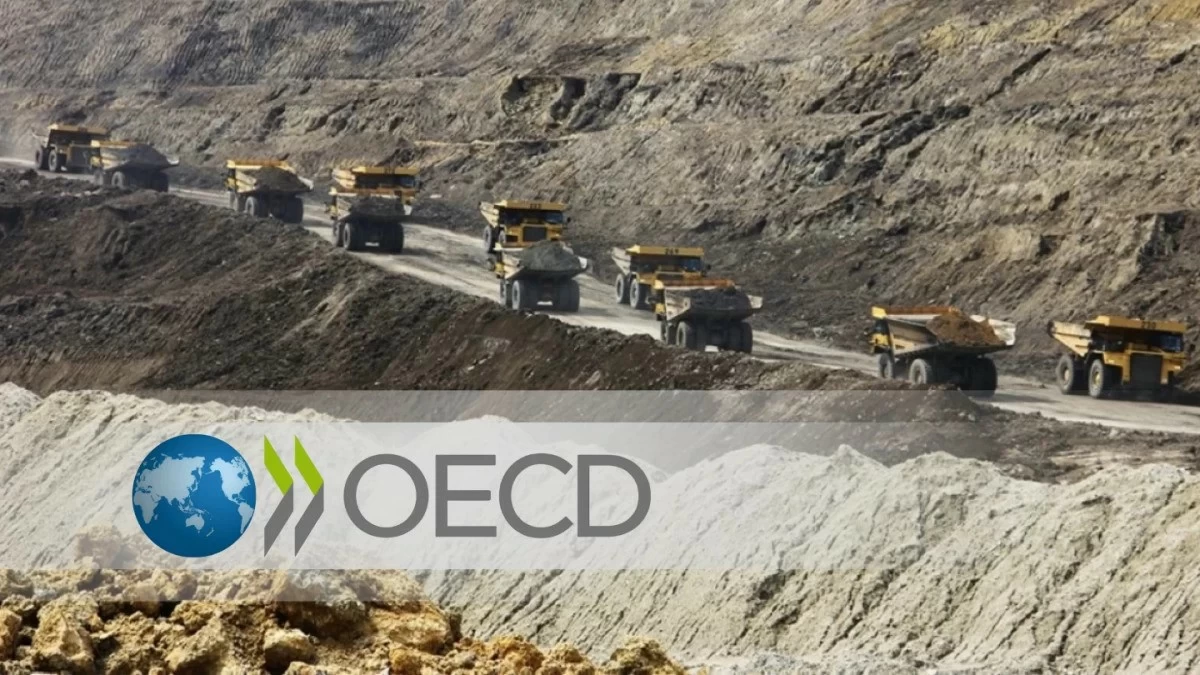
The Philippines’ ongoing efforts to become an alternative investment hub for nickel mining companies looking to diversify their operations away from China are threatened by persistent regulatory gaps, according to the Paris-based Organization for Economic Cooperation and Development (OECD).
In a report on Tuesday, Oct. 27, OECD said several regulatory issues are plaguing the country’s strategy to position itself at the heart of a China-free nickel supply chain to encourage investment.
OECD noted that high environmental and social costs are constraining expansion projects, while the country’s low-cost environment is making it challenging to finance new refining capacity.
It added that downstream projects are increasingly subject to scrutiny and delays due to local opposition, as in the case of Palawan province, where community backlash triggered a temporary moratorium on new licenses.
“The Philippines mining framework is less centralized, with the central government making high-level decisions and holding permitting authority while regional/local entities playing supportive administrative roles,” OECD said.
These hurdles are expected to affect the government’s efforts to promote the country as an alternative to China’s dominant role in global battery materials and the broader nickel market.
The Philippines, the world’s second-largest nickel producer, is working to leverage growing concerns over supply concentration in China to attract companies looking to diversify their sourcing.
OECD said countries such as the United States (US), the United Kingdom (UK), Australia, Japan, and South Korea are among those interested in investing in the country.
Last February, the Philippines entered into a memorandum of understanding (MOU) with the US to cooperate on global critical mineral supply chains and explore ways to attract foreign investment in refining capacity.
The country deepened its partnership with the US on critical minerals through its entry into the Pax Silica initiative in April, which aims to secure the global supply chain for emerging technologies while further countering China’s dominance.
To ensure investors consider the country, Chamber of Mines of the Philippines (COMP) chairman Michael Toledo emphasized the need for the government to implement predictable policies.
“We are competing for investment, certainly, but we are also competing for credibility. Investors need predictable rules,” Toledo said during the Mining Philippines 2026 International Conference and Exhibition also on Tuesday.
Department of Environment and Natural Resources (DENR) Assistant Secretary Michael Cabalda said one measure aimed at ensuring predictability is the recently issued Executive Order (EO) No. 122, which established a national policy framework for the critical minerals sector.
Cabalda said the policy would be crucial in helping the country transition from being a mere exporter of raw minerals to becoming a value-adding player in the global critical minerals supply chain.
To implement EO 122, Cabalda said the DENR has identified gold, silver, copper, molybdenum, nickel, cobalt, stadium, iron, chromium, limestone, and silica for inclusion in the country’s critical minerals list.
The identification of priority minerals is expected to help the government define where facilitation, fiscal alignment, and investment promotion will be concentrated.
Cabalda added that the DENR is committed to eliminating regulatory gaps and improving coordination with other government agencies to further promote the local mining industry as a major investment asset.
Source: Manila Bulletin