
Mining needs policy lift as nickel boom seen in focus on RE, e-vehicles
THE chairman of the House Committee on Ways and Means has called for clarity in the country’s mining policies and laws that encourage domestic value-added as nickel is poised to create 1.3 million jobs—a key driver of economic recovery post-Covid pandemic.
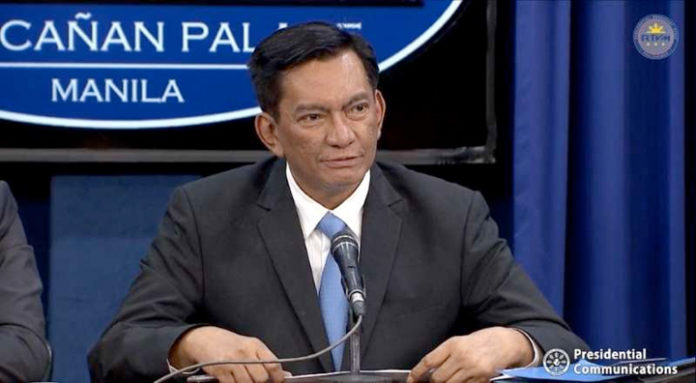
Salceda: “Nickel will be very big, and as one of the world’s largest producers of nickel, we will be very important, if we will be wise.”
In a policy outline titled, “The Future in Nickel,” Albay Rep. Joey Sarte Salceda underscored the country’s prospects as a top base and source for renewable energy and electric vehicle manufacturing.
According to Salceda, the Philippines could become a “world power” in renewable energy and electric cars.
“The Philippines is a top producer of nickel. The future of electric vehicles and renewable is nickel, because it is the missing link to one long-standing problem: How do you stabilize batteries so that they last long enough and can store large amounts of energy?” Salceda said.
“In the past, renewable energy was not always relied upon because of fluctuations in supply. When there’s no wind, there is little wind-powered energy supply. Solar energy requires consistent sunlight, and so on,” he added.
With powerful battery technology, driven by nickel and cobalt—another Philippine product—renewable energy can be stored better, so that fluctuations are managed, the lawmaker said.
“In other words, we now have the power and the prospects to create millions of jobs in renewable energy, battery manufacturing, sustainable mining, and related sectors. This will be a key driver of economic recovery post-Covid, but we have to be very wise with our policies,” Salceda said.
Over the next 10 years, the House leader added, some 1.3 million jobs await the country in nickel-related industries.
“The world appears to see that this is the future. Top nickel buyer and electric vehicle manufacturer Tesla is already larger in market cap than all other major car manufacturers combined. Chinese electric vehicle manufacturers are also rising. Nickel will be very big, and as one of the world’s largest producers of nickel, we will be very important, if we will be wise,” he said.
Moreover, Salceda said that the country “can become a global power in renewable energy and in the electric vehicle supply chain, but only if it makes the right policy moves.”
“The Philippines remains among the world’s largest producers of nickel. Despite taking a small production dip between 2017 and 2018, when nickel production fell from 366,000 MT to 340,000 MT, the nation increased its output to 420,000 MT in 2019.”
5 requirements
Salceda, meanwhile, listed five key policy requirements needed to induce a boom in the country’s nickel sector.
First, Salceda said, “Clarity in its mining policies will be of the utmost importance.”
He explained: “By enacting a fiscal regime on mining, the country will be able to negotiate new, more responsible mining agreements that can keep its nickel supply sustainable. Passing HB 6135, or the Fiscal Regime for the Mining Industry, should be a national priority.”
Salceda added that the House is likely to pass its version of the fiscal regime on mining, which will then open the door to new mineral agreements, when session resumes early next year.
Also, he said sustainable public finance policies should be in place with the setting up of the Mineral Resources Trust Fund in HB 6135.
Salceda said the bill will also ensure that the country generates savings from booms in the prices of mineral commodities such as nickel.
“Reliability of its natural gas supply will be key. Nickel mining requires natural gas and oil in its extraction processes. The enactment of favorable policies for the maximization of the country’s natural gas resources in the West Philippine Sea will be key,’ Salceda added.
Salceda also highlighted the need for domestic value added.
“To maximize the benefits of its extractive industry, the Philippines should promote domestic value-added. The launching of the Leyte Ecological Industrial Zone (LEIZ) roadmap, accompanied by the Copper Industry Development Roadmap, is a welcome development in this direction. The country should make a push to occupy significant portions of the electric vehicle and battery manufacturing space.
In this regard, the lawmaker said the urgent enactment of the country’s main instrument of industrial policy, the Corporate Recovery and Tax Incentives for Enterprises (CREATE) Act, is also extremely important.
“Domestic research is key to domestic value-added. The Philippines must, itself, encourage an environment conducive to renewable energy and electric vehicles. Continued investments in research and development, coupled with labor training, will be key to building up the Philippines as a manufacturing base for electric vehicles and renewable industry energy components,” the solon added.
Salceda, meanwhile, said he will work closely with the Department of Trade and Industry (DTI) and the Department of Environment and Natural Resources (DENR) to ensure that policies are in place to promote a sustainable nickel industry in the country.
Source: Business Mirror