

Trump to host leaders of 5 African nations rich in critical minerals
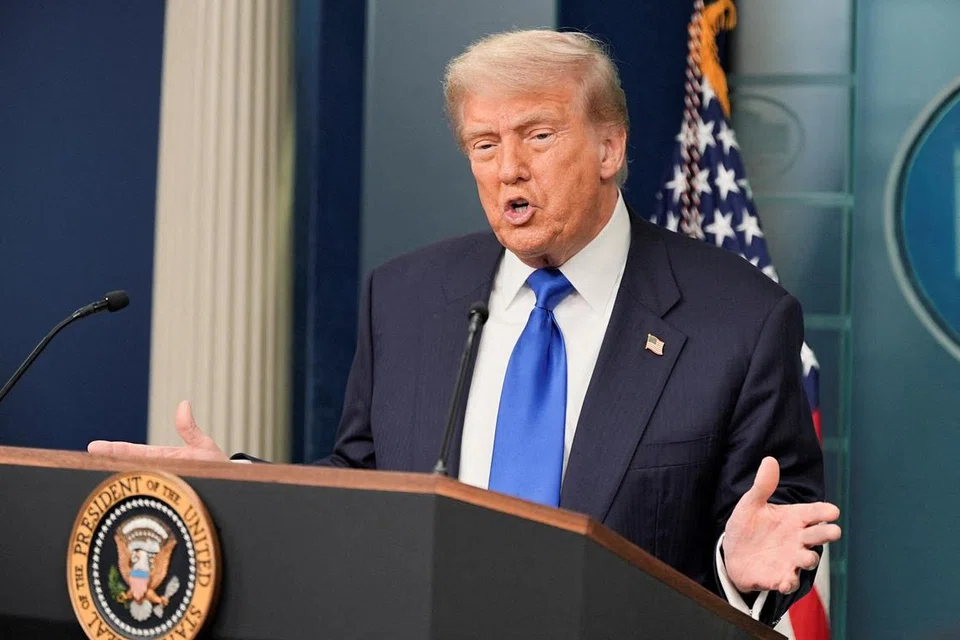
Mr. Donald Trump invited the leaders of Gabon, Guinea-Bissau, Liberia, Mauritania and Senegal for a three-day summit at the White House. PHOTOS: REUTERS
WASHINGTON – US President Donald Trump is scheduled this week to meet the leaders of five African nations that will potentially offer American businesses opportunities in critical minerals and other natural resources.
Mr. Trump invited the leaders of Gabon, Guinea-Bissau, Liberia, Mauritania and Senegal for a three-day summit at the White House that is scheduled to begin on July 8.
The five rank among Africa’s smaller economies, with a combined gross domestic product of only around US$75 billion (S$96 billion), according to the International Monetary Fund. But they are rich in minerals and have the potential to produce far more than they do today.
Notably absent from the gathering are leaders from Africa’s biggest economies including South Africa, which faces the introduction of a 30 per cent reciprocal tariff by the Trump administration, and Nigeria, the continent’s largest oil producer.
Ahead of the talks, Liberia’s government announced that it signed a US$1.8 billion agreement with Ivanhoe Atlantic, majority owned by a company founded by Ivanhoe Mines chairman Robert Friedland. The deal will allow the US mining company to rehabilitate and use the country’s railway infrastructure to transport iron ore from neighbouring Guinea for export.
The Central African nation of Gabon, the world’s second-biggest producer of manganese which is used to harden steel products, is expecting to discuss potential investments in its minerals industry, its ambassador to the US, Mr Noël Nelson Messone, said in an interview.
“The president of the republic is keen to see Gabon’s natural resources processed locally to add value to the economy, diversify the economy and create jobs,” he added.
Four of the countries – excluding Gabon – are on the periphery of the unstable Sahel region, and may offer opportunities for security cooperation in an area that has been blighted by a decade-long Islamist insurgency and military coups in recent years.
Their importance has been heightened after the US was forced to shut its drone base in Niger in 2024. Washington has strained relations with Burkina Faso, Mali and Chad, which ended a security agreement with the US in April 2024.
Following is a list of potential investment opportunities the five countries offer:
Gabon
In addition to manganese, Gabon also has massive deposits of high-grade iron ore and is a member of Opec, the oil cartel. Its government in June signed a US$3.8 billion pact with the African Export-Import Bank to fund mineral and infrastructure projects in the country.
Guinea-Bissau
In February, it signed four cooperation agreements with Russia to prospect for oil and gas, and explore deposits of bauxite and phosphate – used to make aluminum and fertiliser respectively. Russian aluminium producer United Co. Rusal International PJSC plans to begin mining in the country.
The US Drug Enforcement Agency is working with the authorities in the West African nation to curb cartel-linked cocaine trafficking.
Liberia
Its government announced earlier in 2025 it has deposits of critical minerals including lithium, manganese, cobalt and neodymium that it hopes will attract US$3 billion of investment.
The government plans to lobby for US investment in its natural resources, including fisheries, the Monrovia-based Liberian Observer reported last week.
The country is historically aligned with the US – it was founded in the 19th century as a homeland for slaves freed in America.
Mauritania
The country began producing gas from BP’s Greater Tortue Ahmeyim development in 2024. Like other African nations including Mozambique and Tanzania, it aims to use gas from projects led by international oil companies to industrialise its economy.
The US International Development Finance is assessing a uranium project in the country.
Senegal
It began exporting liquefied natural gas earlier in 2025. It plans to develop more than three gigawatts of gas-to-power capacity by 2050 to reduce its dependence on oil and coal to generate electricity.
The government announced in May it is seeking to attract US$1.7 billion of investment to build digital infrastructure including data centres and high-speed internet connections.
Source: The Strait Times